The impenetrable fortress where the Jewish Zealots made their stand against Rome.
Masada is located on a steep and isolated hill on the edge of the Judean desert mountains, on the shores of the Dead Sea. It was the last and most important fortress of the great Jewish rebellion against Rome (66-73 AD), and one of the most impressive archaeological sites in Israel.
The last stand of the Jewish freedom fighters ended in tragic events in its last days, which were thoroughly detailed in the accords of the Roman historian of that period, Josephus Flavius. Masada became one of the Jewish people’s greatest icons, and a symbol of humanity’s struggle for freedom from oppression. Israeli soldiers take an oath here: “Masada shall not fall again.”
The below Bible verses are very much speculation, it is unlikely that David specifically spent time in Masada, but certainly the terrain described in the Bible as “strongholds in the wilderness” could possibly be Masada.
- 6 When Abiathar the son of Ahimelech had fled to David to Keilah, he had come down with an ephod in his hand. 7 Now it was told Saul that David had come to Keilah. And Saul said, “God has given him into my hand, for he has shut himself in by entering a town that has gates and bars.” 8 And Saul summoned all the people to war, to go down to Keilah, to besiege David and his men. 9 David knew that Saul was plotting harm against him. And he said to Abiathar the priest, “Bring the ephod here.” 10 Then David said, “O LORD , the God of Israel, your servant has surely heard that Saul seeks to come to Keilah, to destroy the city on my account. 11 Will the men of Keilah surrender me into his hand? Will Saul come down, as your servant has heard? O LORD , the God of Israel, please tell your servant.” And the LORD said, “He will come down.” 12 Then David said, “Will the men of Keilah surrender me and my men into the hand of Saul?” And the LORD said, “They will surrender you.” 13 Then David and his men, who were about six hundred, arose and departed from Keilah, and they went wherever they could go. When Saul was told that David had escaped from Keilah, he gave up the expedition. 14 And David remained in the strongholds in the wilderness, in the hill country of the wilderness of Ziph. And Saul sought him every day, but God did not give him into his hand. – 1 Samuel 23:6-14
- 8 From the Gadites there went over to David at the stronghold in the wilderness mighty and experienced warriors, expert with shield and spear, whose faces were like the faces of lions and who were swift as gazelles upon the mountains: 9 Ezer the chief, Obadiah second, Eliab third, 10 Mishmannah fourth, Jeremiah fifth, 11 Attai sixth, Eliel seventh, 12 Johanan eighth, Elzabad ninth, 13 Jeremiah tenth, Machbannai eleventh. 14 These Gadites were officers of the army; the least was a match for a hundred men and the greatest for a thousand. 15 These are the men who crossed the Jordan in the first month, when it was overflowing all its banks, and put to flight all those in the valleys, to the east and to the west. – 1 Chronicles 12:8-15
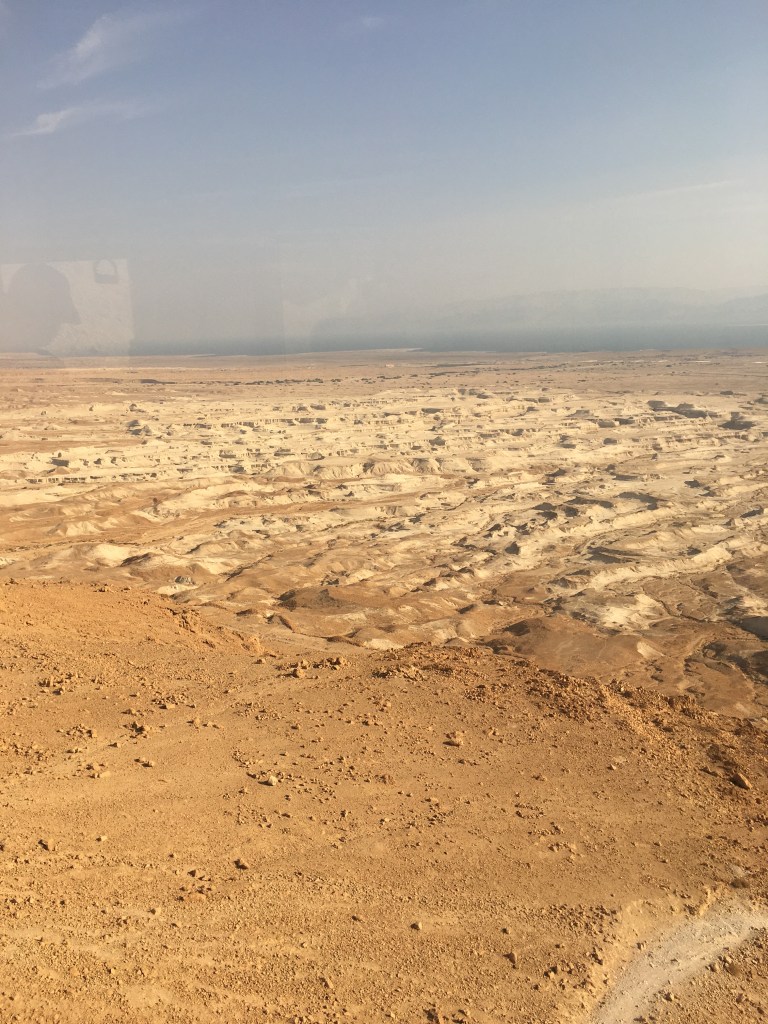
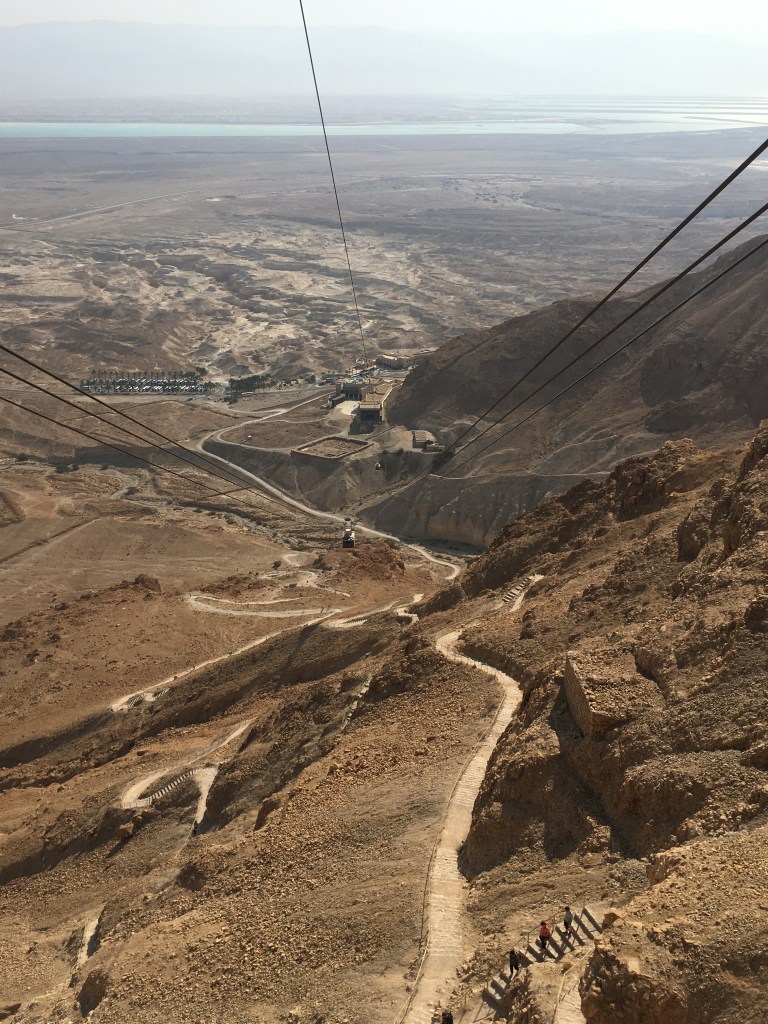
View from gondola on way up to top of mountain 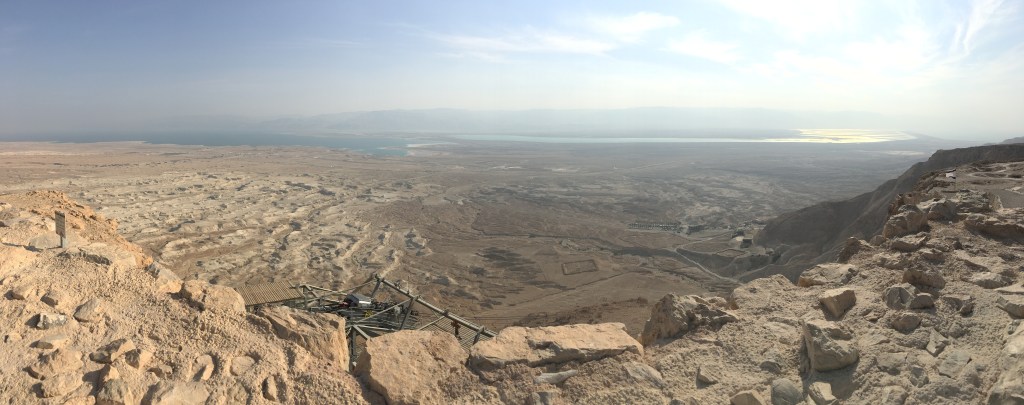
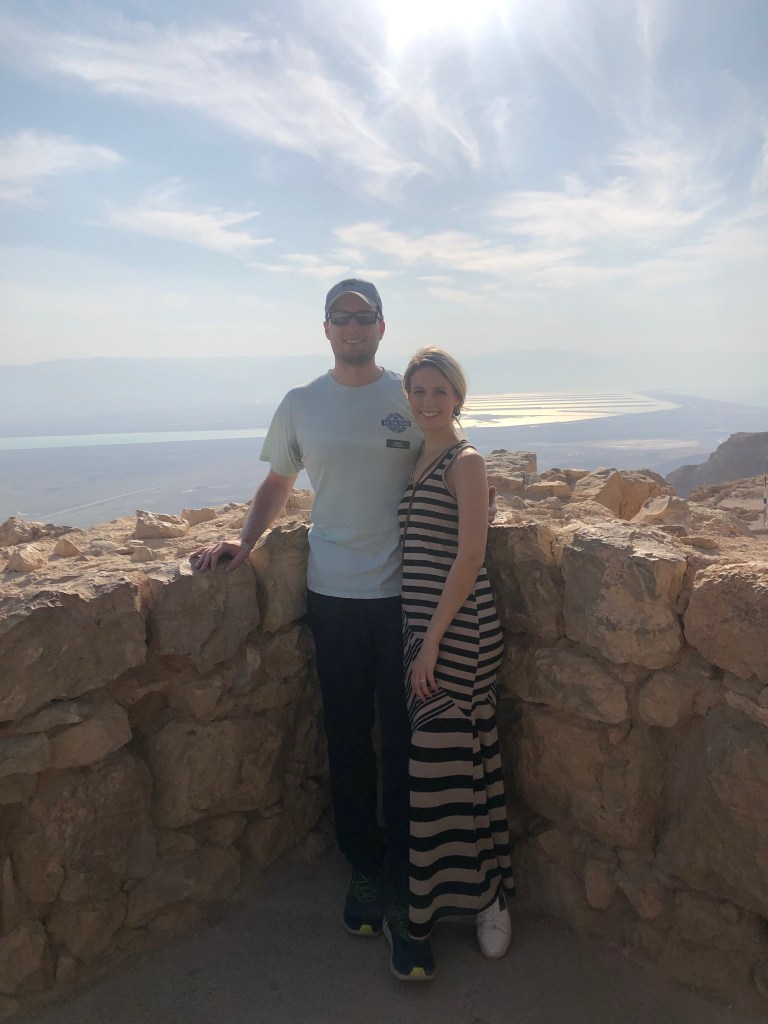
View from top of Masada 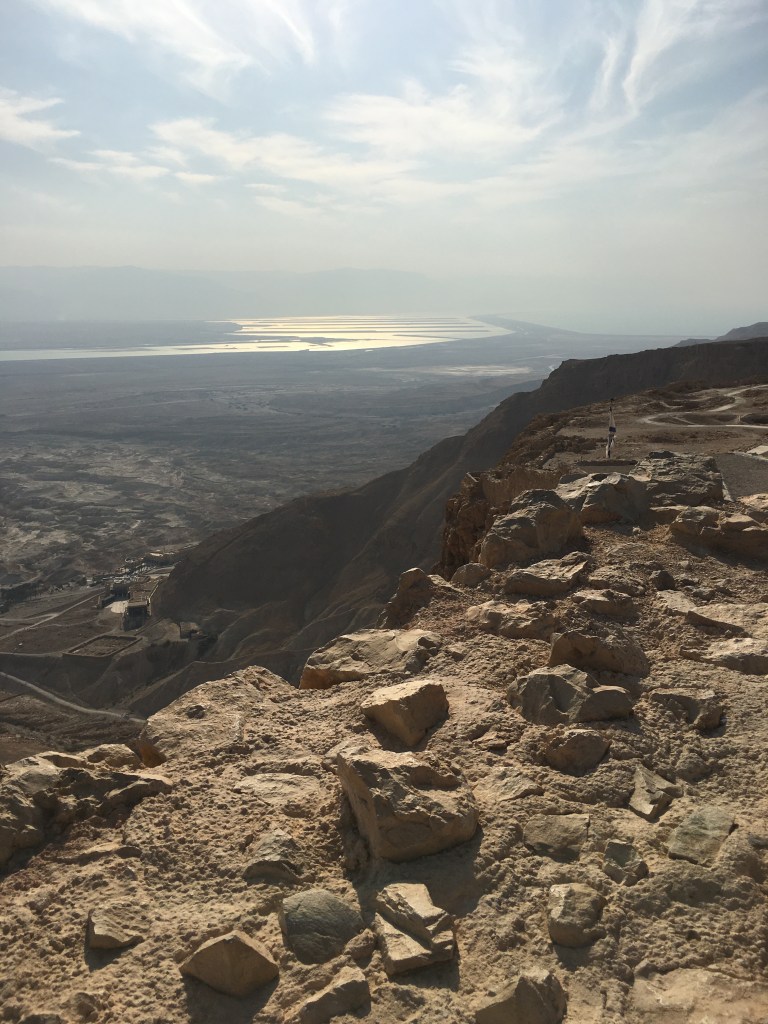
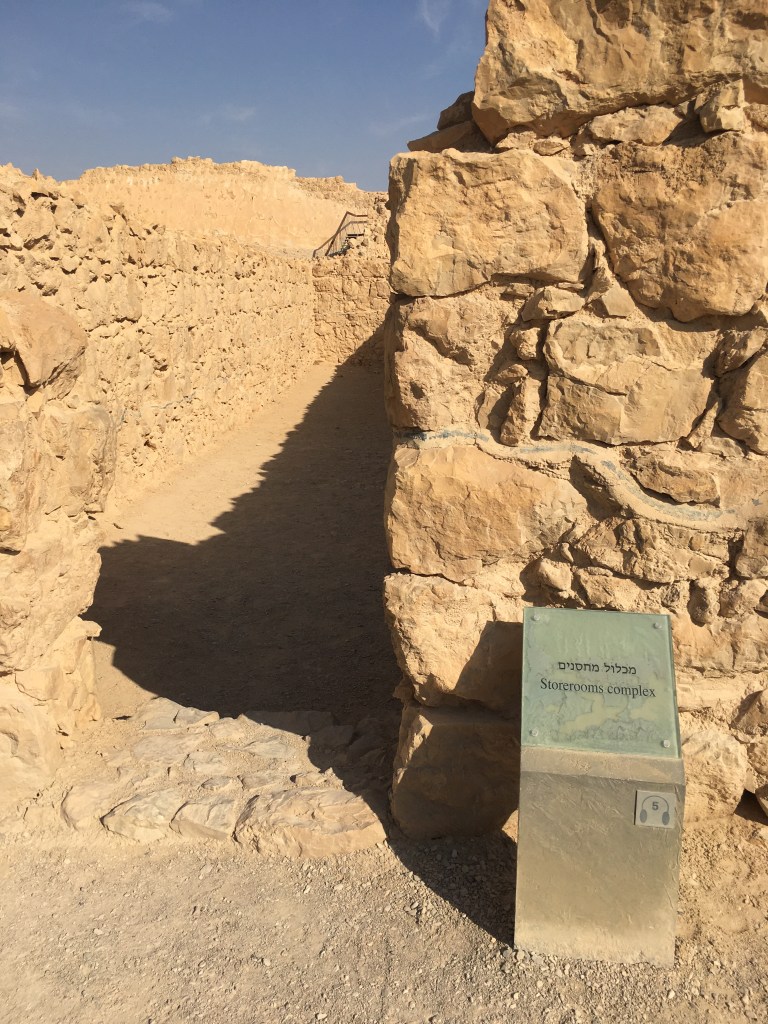
Storerooms for materials 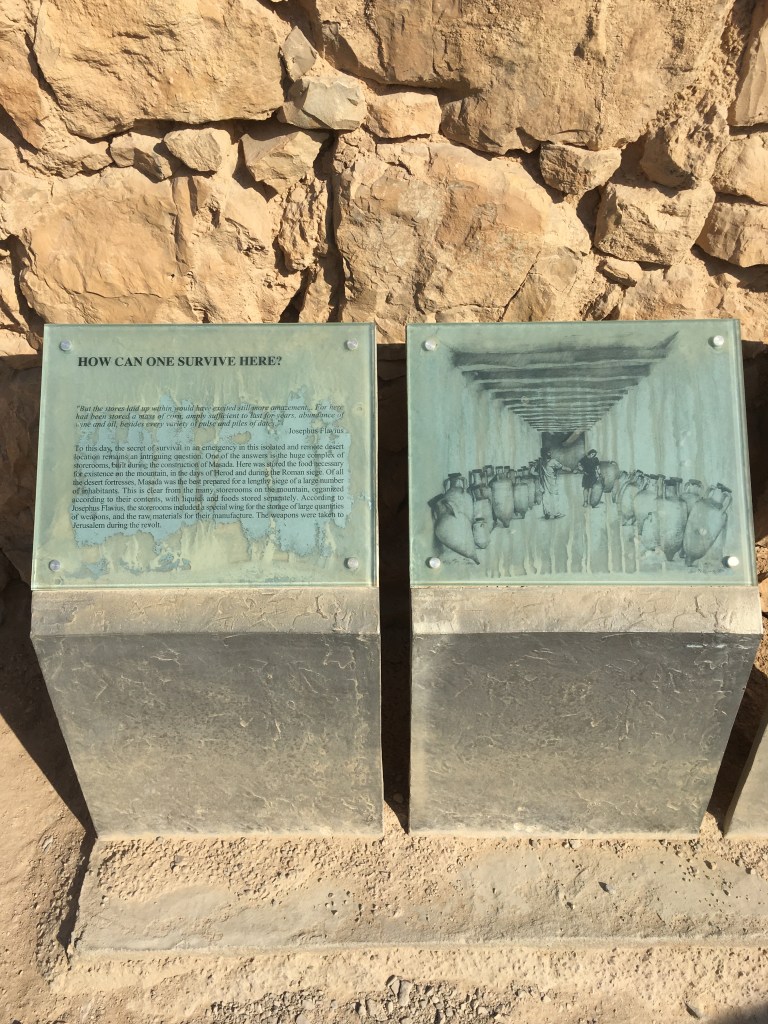
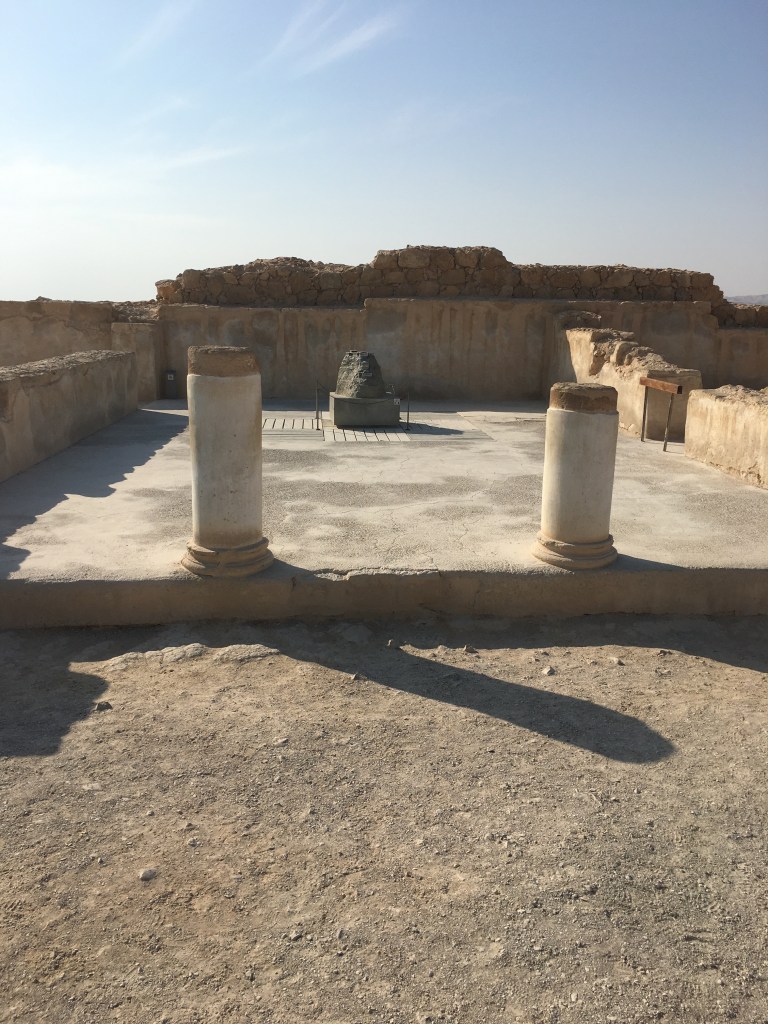
Sleeping quarters of the guests of Herod (guest house) 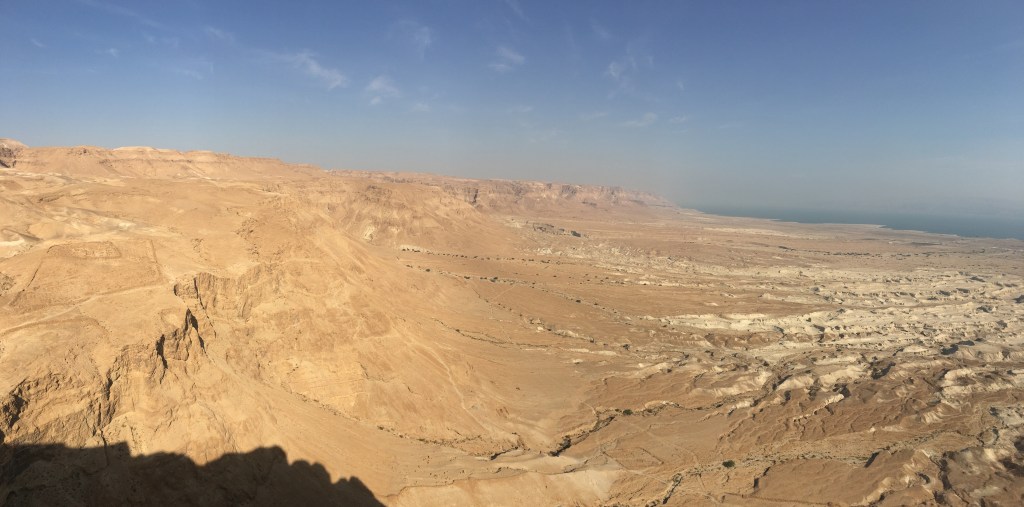
View from the Northern end of the city (where the Kings palace resided) 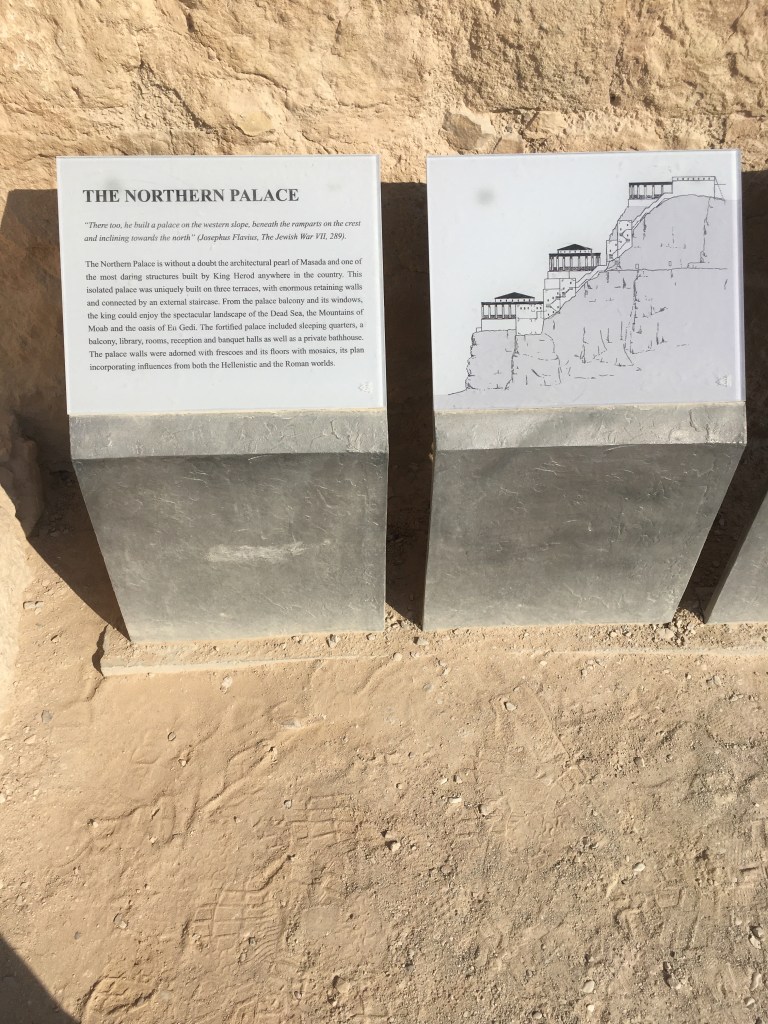
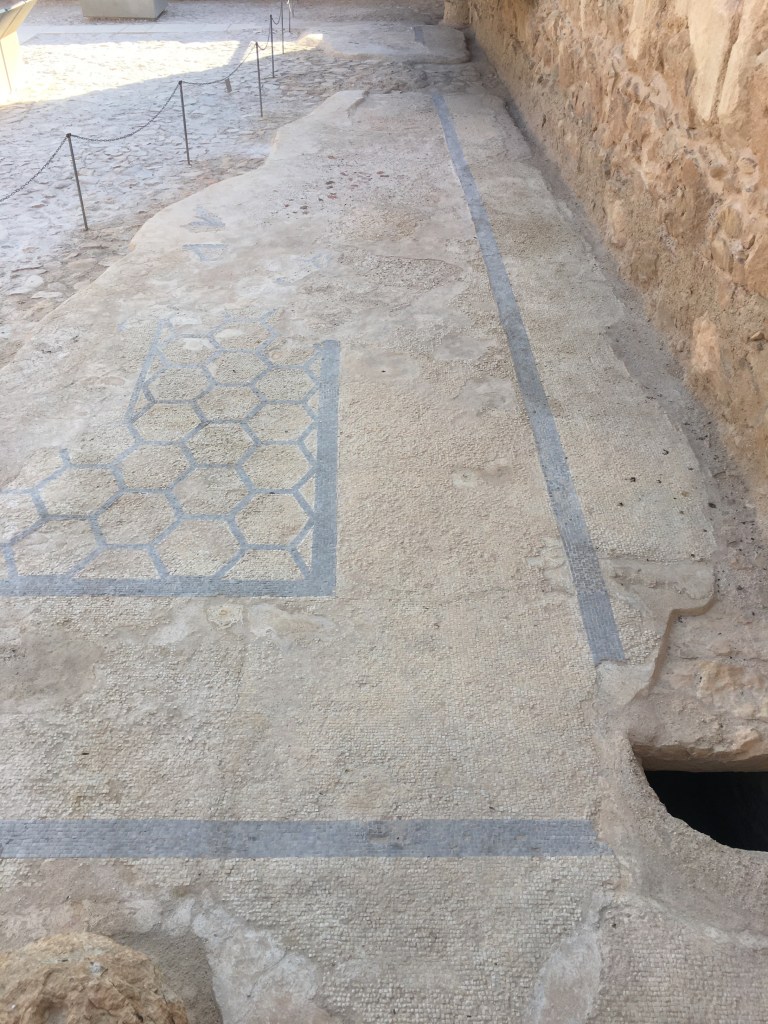
Mosaic flooring 
Inside of bathhouse connected to the guest quarters 
Ancient sauna 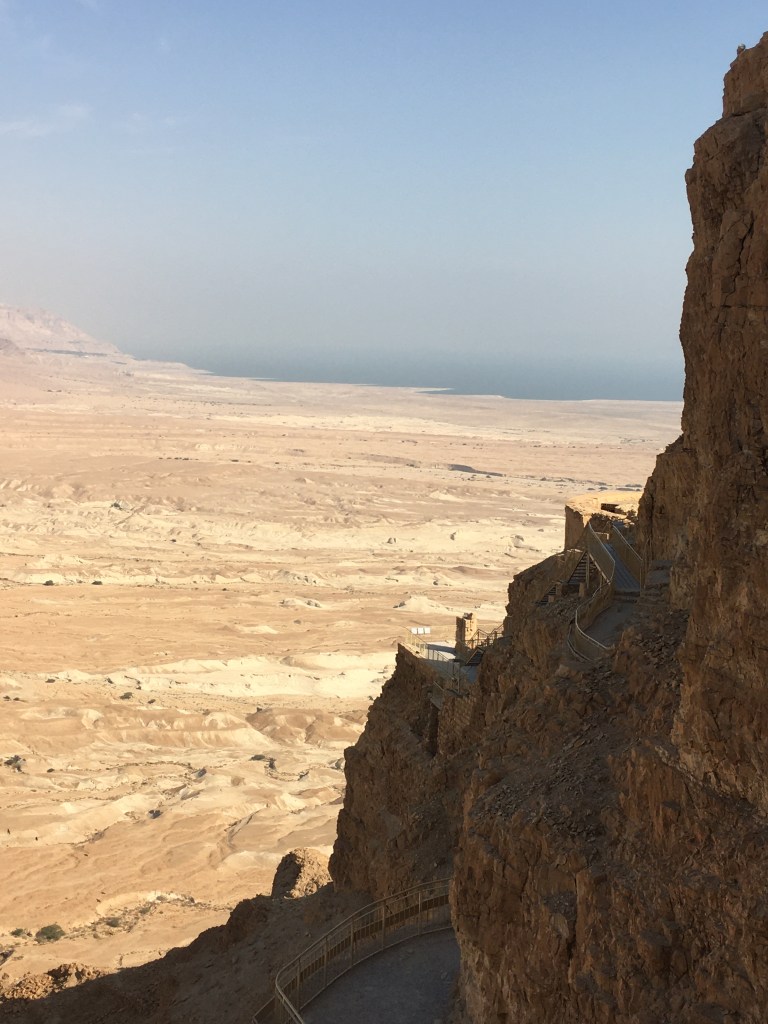
Steps down towards kings palace 
I’m order to get water to the city. Sophisticated water paths were carved into the mountains that routed all the water from the rain to the cisterns in the city. One flash flood would have retained enough water for a year in the city. This is absolutely mind blowing to see in person 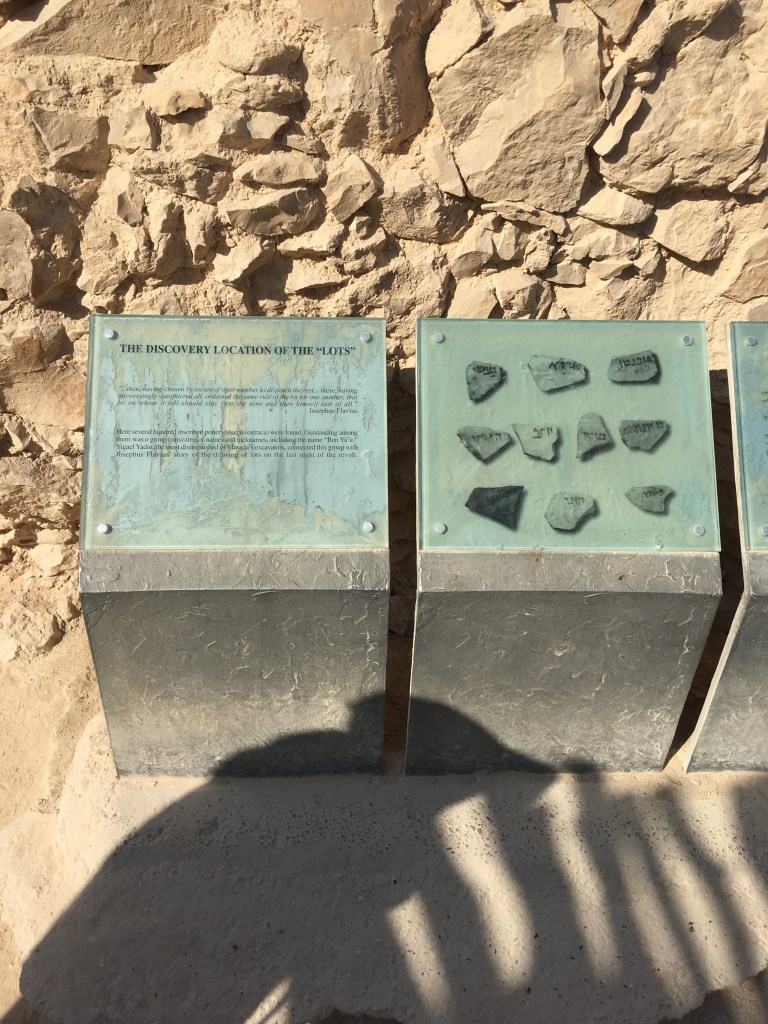
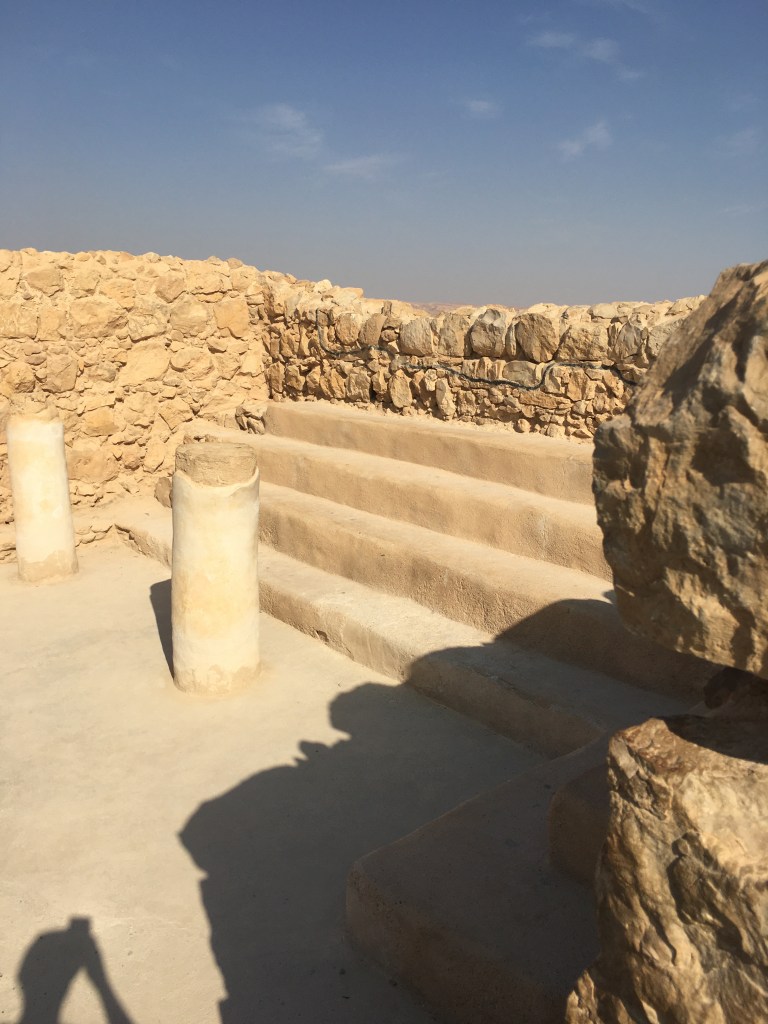
Synagogue for worship. many Jewish ceremonies are still performed here to this day. 
Columbarium where they raised and kept doves 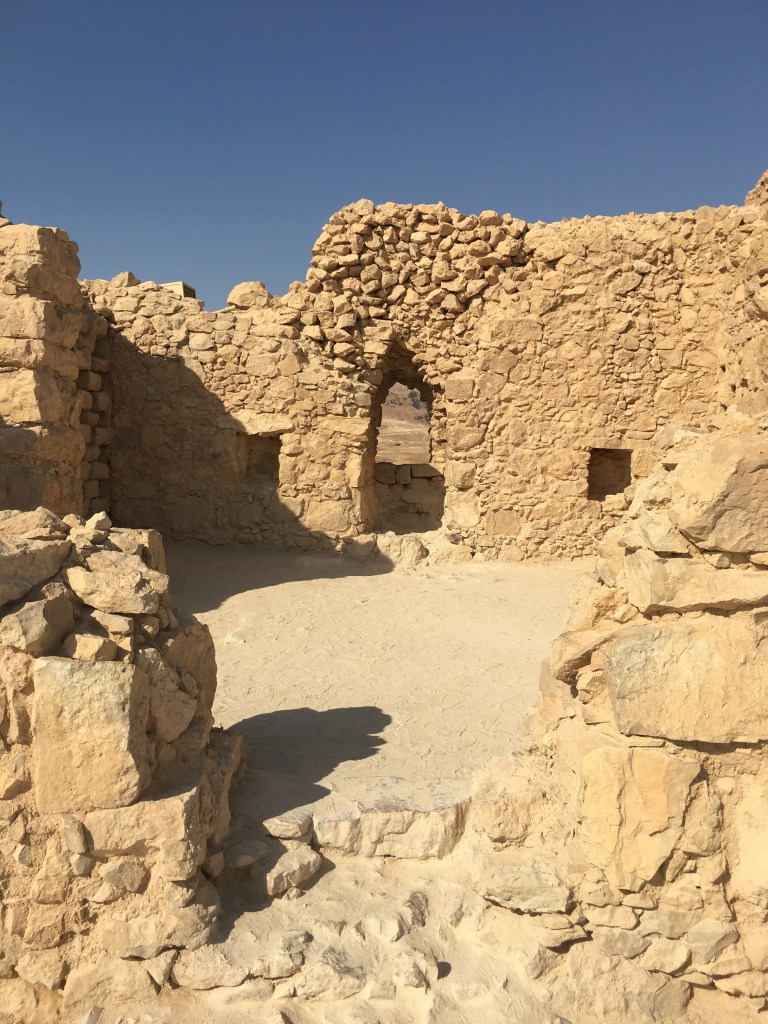

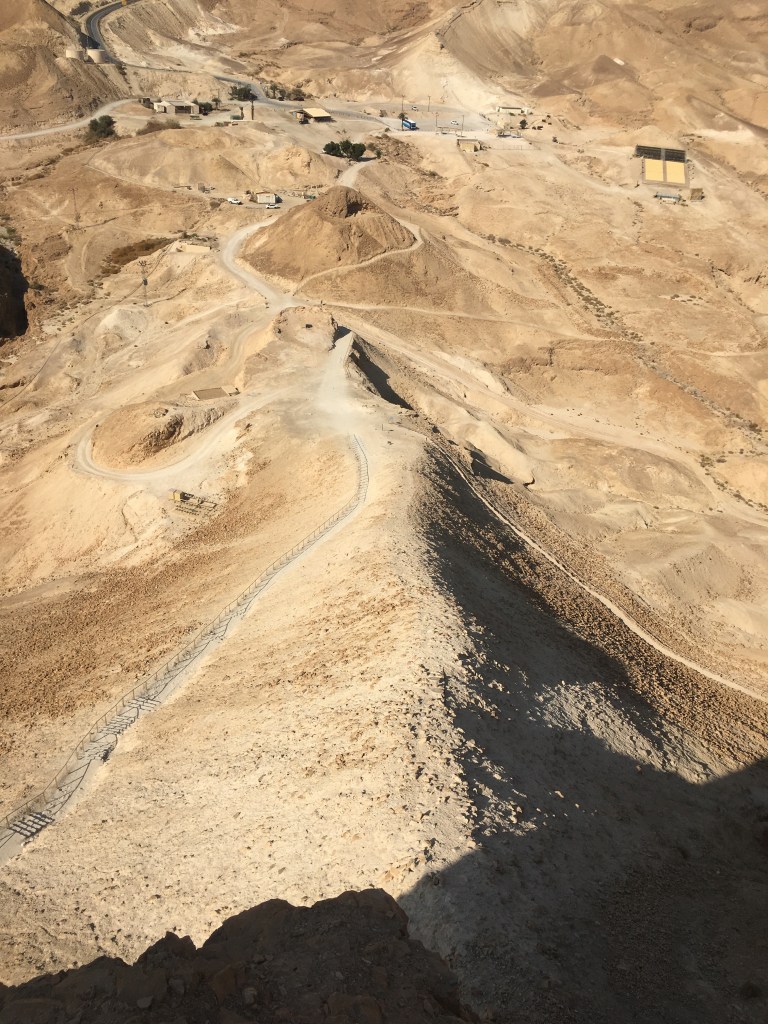
Roman siege ramp. All of the inhabitants of the city killed themselves before being captured by the Romans. 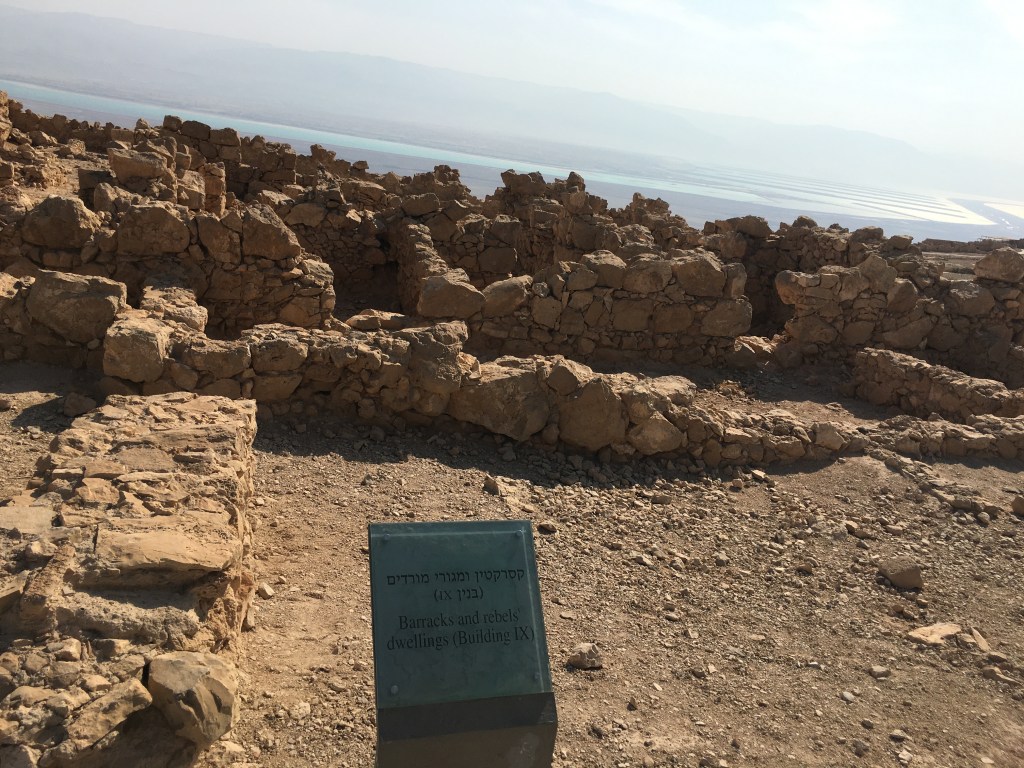
 Kevin & Aly: Travel to Israel