Reflection: Caesarea Philippi is a fairly small city and quick tour. Jesus did not spend a tremendous amount of time in Caesarea Philipi, but the moment described in three of the gospels when Peter tells Jesus “You are the Christ” is incredibly revelatory. It is worth the visit to understand the context of that moment in a city filled with altars to pagan gods.
Prayer: That we would remind ourselves of the importance of Jesus being the Christ and the Son of God.
Overview:
Banias (Paneas), or Caesarea-Philippi, was an impressive Greco-Roman city located near a flowing spring – one of the sources of the Jordan river, on the foothills of the Hermon mountain. A Roman sanctuary, which included temples and ritual courtyards, was built near the sacred grotto of the Greco-Roman God Pan. The ancient city, named after Pan, was located to the south of the springs. (Source: Biblewalks.com)
- 13 Now when Jesus came into the district of Caesarea Philippi, he asked his disciples, “Who do people say that the Son of Man is?” 14 And they said, “Some say John the Baptist, others say Elijah, and others Jeremiah or one of the prophets.” 15 He said to them, “But who do you say that I am?” 16 Simon Peter replied, “You are the Christ, the Son of the living God.” 17 And Jesus answered him, “Blessed are you, Simon Bar-Jonah! For flesh and blood has not revealed this to you, but my Father who is in heaven. 18 And I tell you, you are Peter, and on this rock I will build my church, and the gates of hell shall not prevail against it. 19 I will give you the keys of the kingdom of heaven, and whatever you bind on earth shall be bound in heaven, and whatever you loose on earth shall be loosed in heaven.” 20 Then he strictly charged the disciples to tell no one that he was the Christ. – Matthew 16:13-20
- 27 And Jesus went on with his disciples to the villages of Caesarea Philippi. And on the way he asked his disciples, “Who do people say that I am?” 28 And they told him, “John the Baptist; and others say, Elijah; and others, one of the prophets.” 29 And he asked them, “But who do you say that I am?” Peter answered him, “You are the Christ.” 30 And he strictly charged them to tell no one about him. – Mark 8:27-30
- 18 Now it happened that as he was praying alone, the disciples were with him. And he asked them, “Who do the crowds say that I am?” 19 And they answered, “John the Baptist. But others say, Elijah, and others, that one of the prophets of old has risen.” 20 Then he said to them, “But who do you say that I am?” And Peter answered, “The Christ of God.” – Luke 9:18-20
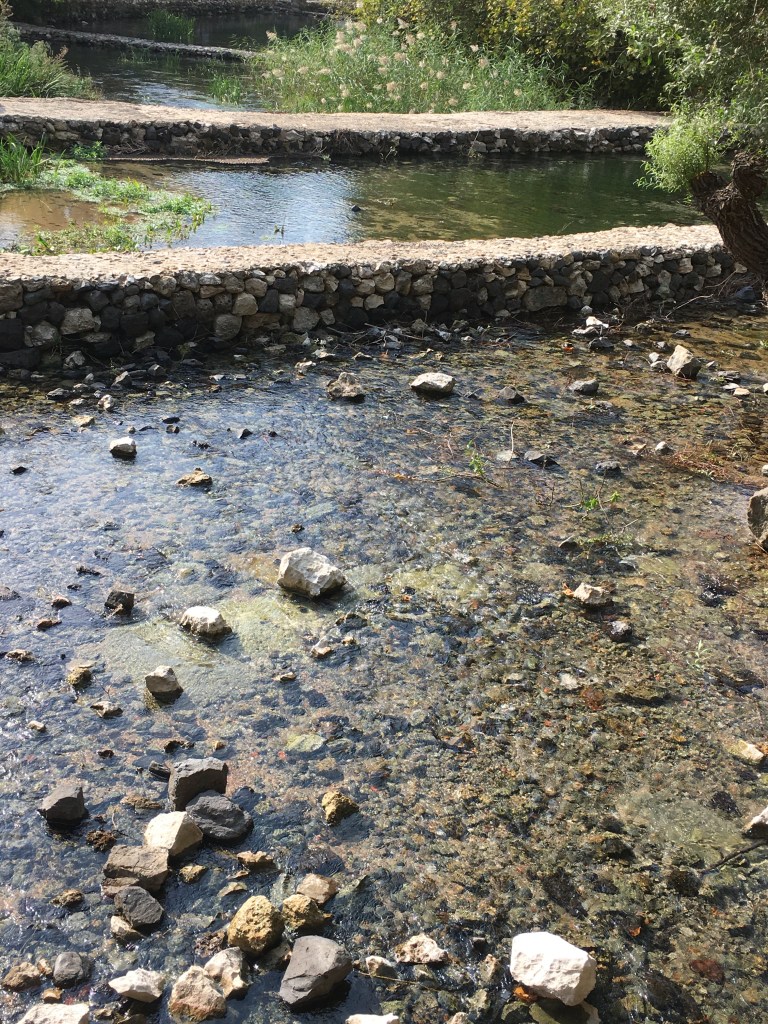
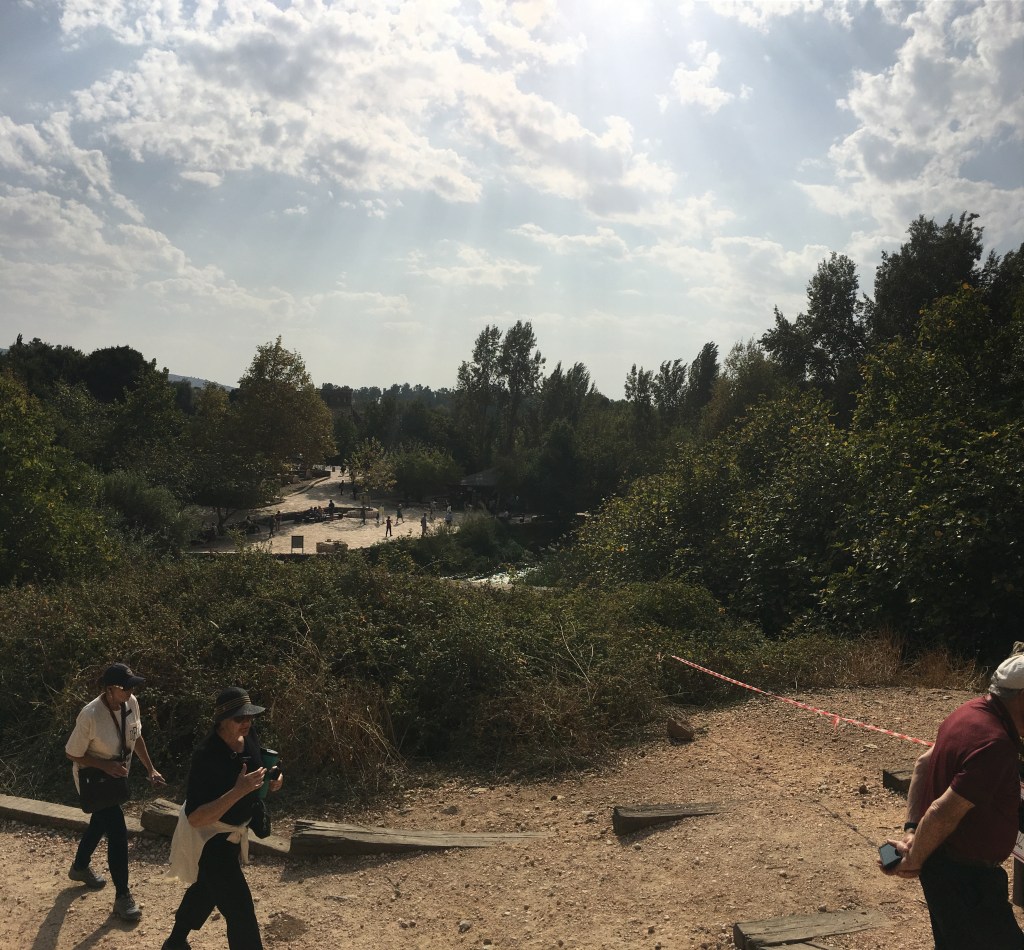
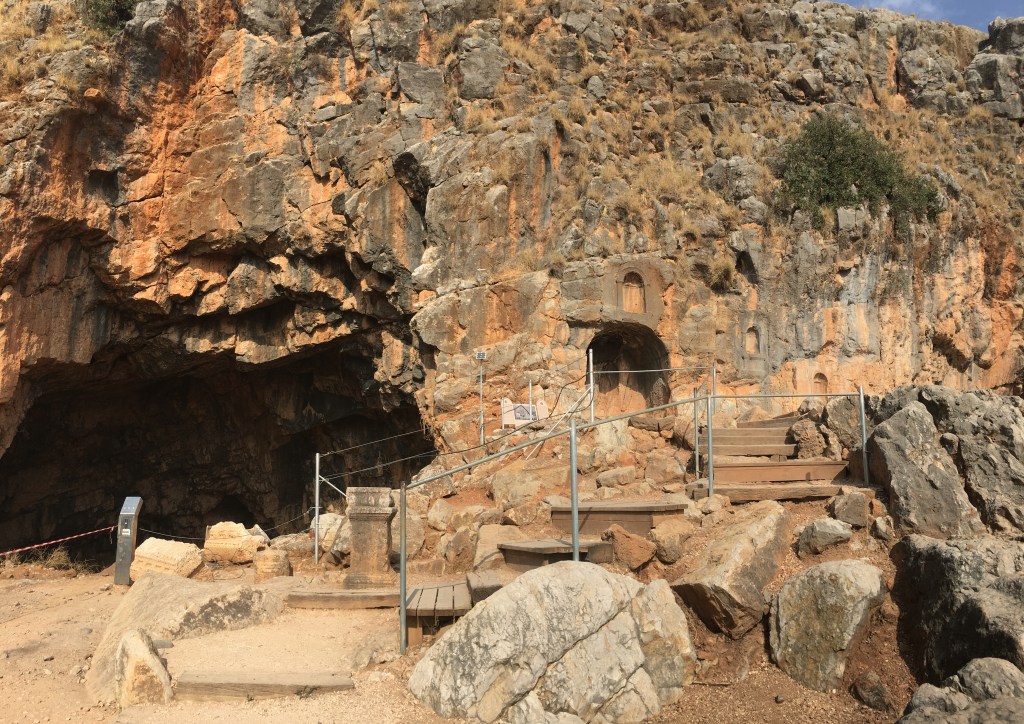
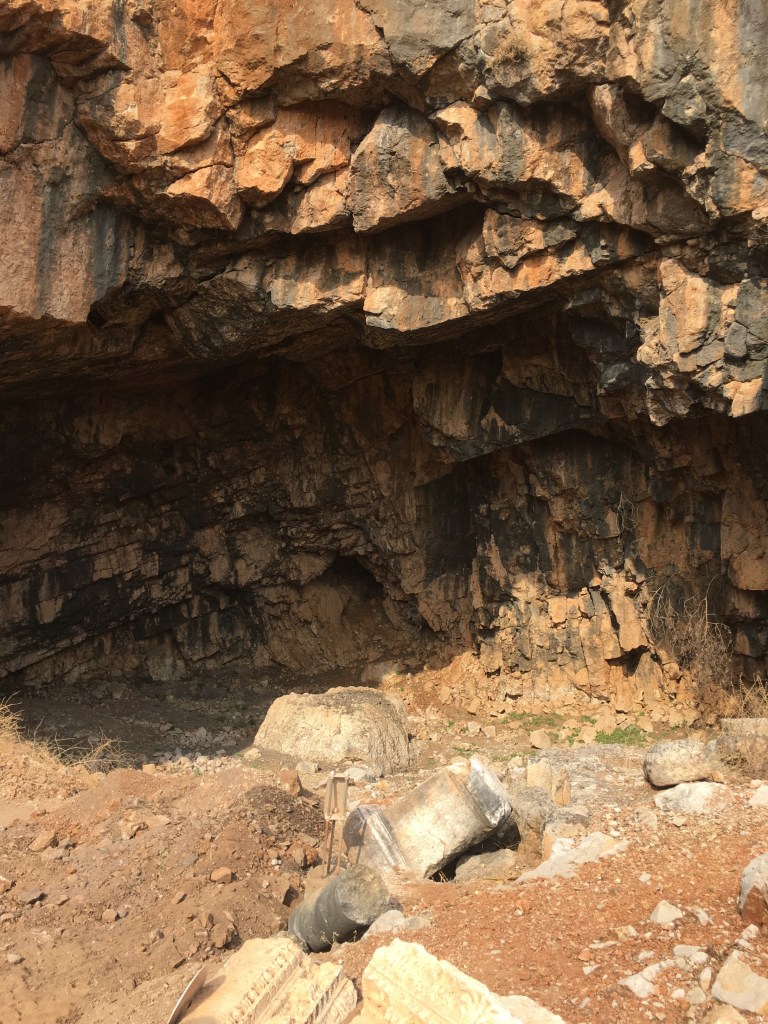
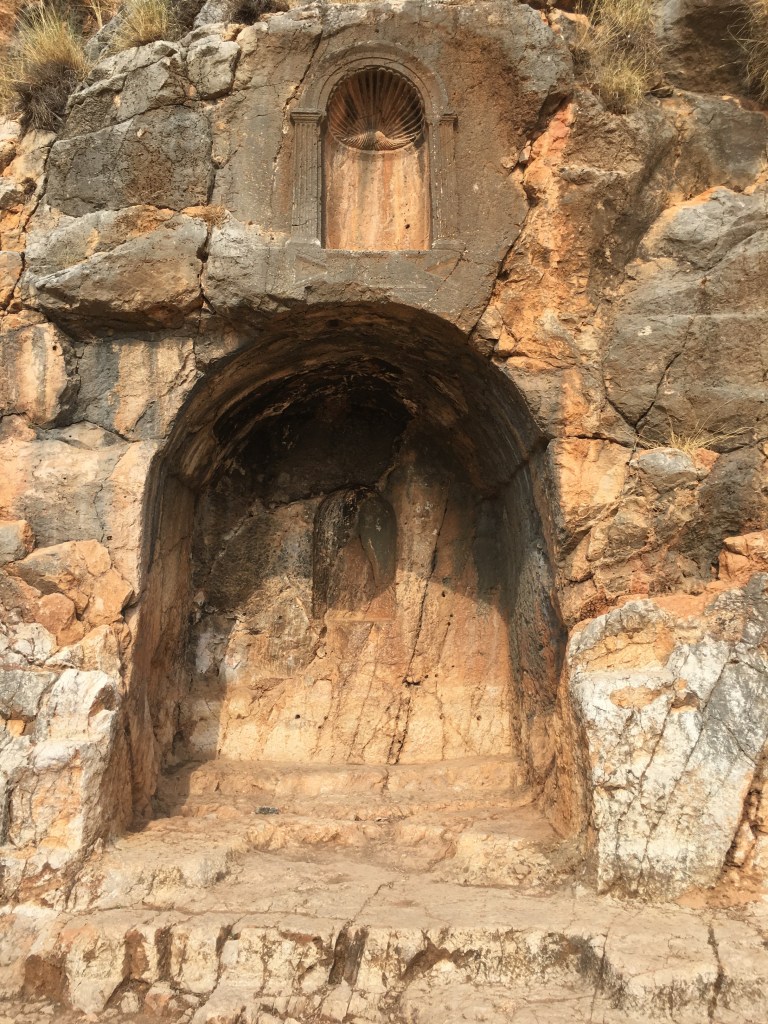
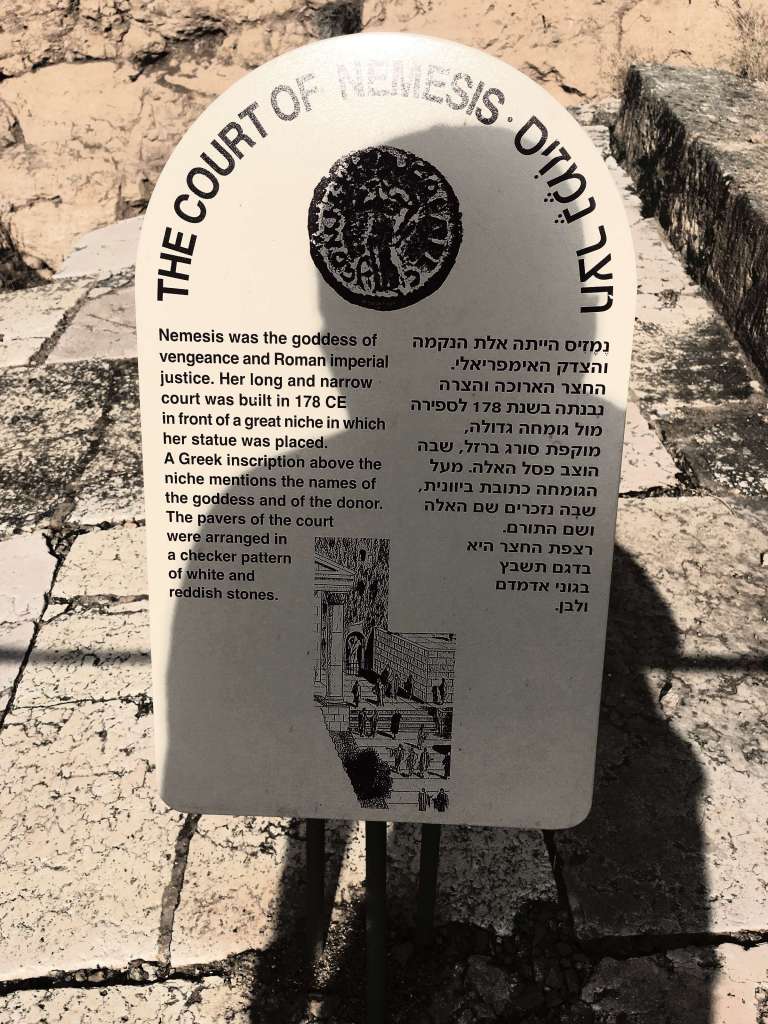

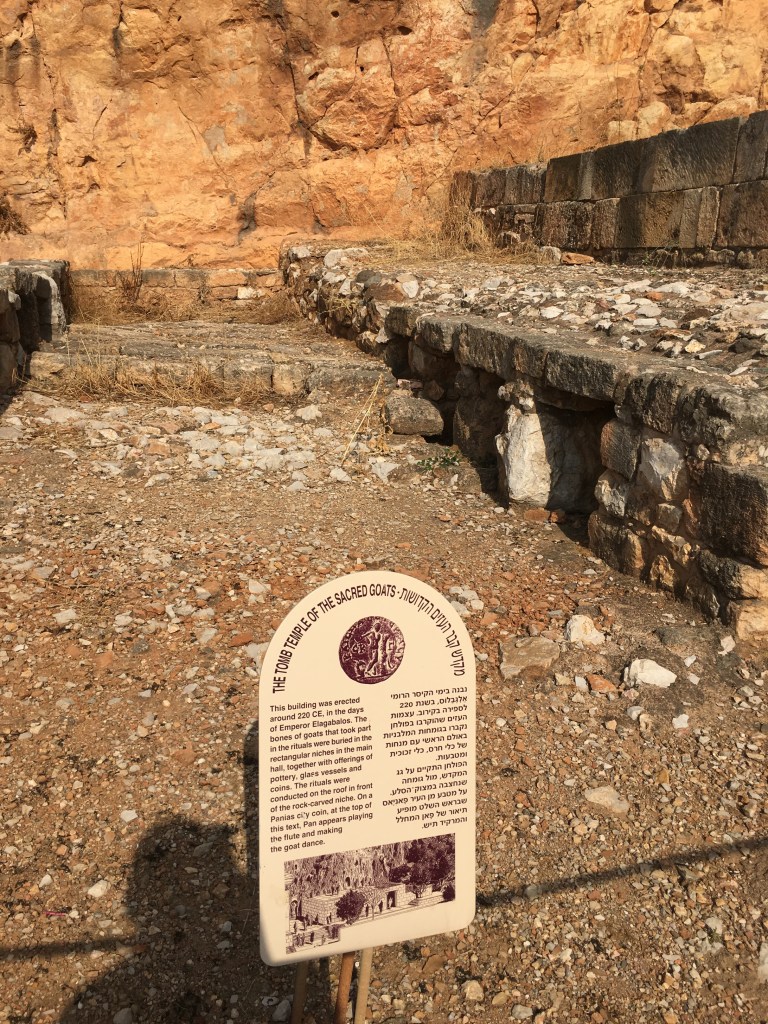
The foundations of a number of temples and ritual courtyards are located around the cave. The Greeks sanctified the cave and dedicated it Pan, the God of shepherds and flocks, mountainside, hunting and rustic music. This gave the city its name – Panium or Panias – which is pronounced in Arabic as Banias.
The cave of Pan became a center of pagan activity starting from the Hellenistic period (from 3rd C BC). Animal sacrifices were thrown into the cave. The sacred sanctuary (temenos) received a higher status after Herod constructed a temple in honor of Augustus (16BC). Additional temples and rock-hewn niches and inscriptions were added. The pagan activity continued until the middle of the Byzantine period, around the 5th C AD, and then they were abandoned. (Source: Biblewalks.com)
 Kevin & Aly: Travel to Israel